


HR training methods fall into four main types: classroom (instructor-led), online (e-learning), on-the-job (learning while working), and blended (a mix of all three). Most effective HR training programs — IHRA’s I-CGHR included — default to a blended model that pairs live instruction with hands-on software practice rather than relying on any single method alone.
Curious how a structured HR program blends all four of these methods into one practical curriculum?
Classroom / Instructor-Led Training
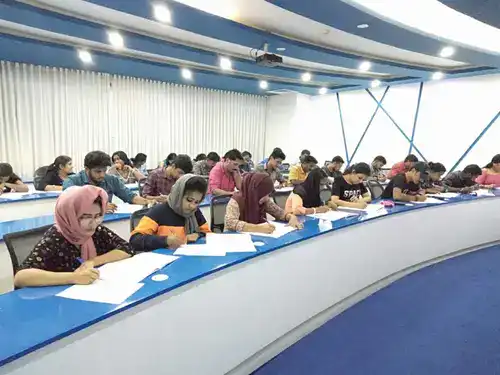
A trainer works with a group in person or over a live online session — the traditional model for onboarding, software walkthroughs, and soft-skills workshops. The advantage is real-time correction: a trainee who’s stuck on a payroll calculation or an ATS workflow gets an answer in the moment, not two days later in a feedback form. The trade-off is cost and pace — classroom training moves at the speed of the group, not the individual, and it’s the most expensive HR training method per learner if a company is running it for a large workforce.
Online / E-Learning Training
Self-paced modules, recorded video, or LMS-based courses that a learner works through on their own schedule. This is the cheapest HR training method to scale — one course can train ten people or ten thousand at close to the same cost — which is exactly why it dominates compliance refreshers and policy updates. Its weakness is the same as its strength: nobody is watching to confirm the learner actually understood the material, only that they clicked through it.
On-the-Job Training
Learning by doing the actual work under supervision — shadowing a senior recruiter, running a real payroll cycle with a mentor checking the output, or handling live tickets on a compliance portal before working solo. Among all HR training techniques, this is the one with the tightest match between what’s taught and what the job actually needs, because the “training” and the “work” are the same activity. It’s slow to design well and it depends entirely on how good the supervising employee is at teaching, not just doing.
Blended Training
A mix of the three methods above — typically classroom or online for concepts, then on-the-job practice to apply them. This is the default training method in HR for a reason: no single method above is complete on its own. Classroom teaches the “why,” online scales the “what,” and on-the-job proves the “can you actually do it.” Most well-run corporate training programs run blended rather than betting everything on one format.
IHRA doesn’t teach these four methods as theory — every one of them is built into a hands-on, software-based training program.
Which Method IHRA Uses — and Why “Practical, Not Theoretical” Wins
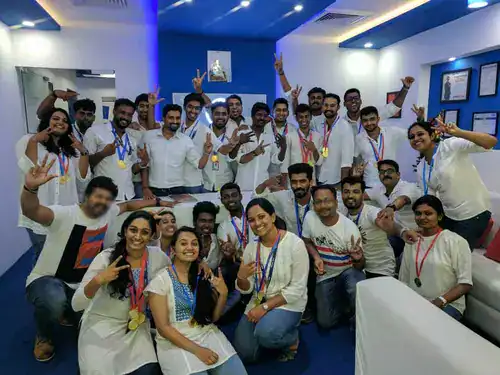
IHRA is an Advanced HR Training Institute with International Certification, and the I-CGHR program is built around a blended method on purpose, weighted heavily toward the on-the-job side rather than lectures alone. That’s the concrete meaning behind IHRA’s core promise of practical, not theoretical training: it isn’t a slogan on a slide, it’s a choice about which of the four methods above gets the most classroom time.
In practice that looks like this: classroom sessions introduce a topic — recruitment, payroll, statutory compliance — and then the same session moves straight into the actual software a corporate HR team uses for it, across 22+ tools including Workday HCM, SAP HCM/SuccessFactors, Oracle HRMS, HRIS & payroll, ATS/recruitment platforms, PMS software, and a statutory compliance portal. A trainee isn’t reading about how an ATS filters resumes; they’re running real candidate data through one, the same on-the-job method described above, just compressed into a structured 4-month timeline alongside AI & automation training and MS Office 365 skills. The complete guide to HR training and development covers how this fits into the wider training-and-development picture; the HR certification course details cover the full I-CGHR structure module by module.
Here’s a short look at one of the software modules trained this way, so “hands-on” means something concrete rather than a marketing word:
Watch more HR training videos on IHRA’s YouTube channel →
The other half of “practical” is what happens once the training ends: interview preparation, resume building, and a placement drive built into the same program rather than sold separately — backed by a 100% Placement Guarantee.
Which HR Training Method Should You Choose?
If you’re an employer choosing between these methods for a team, the honest answer is rarely “just one.” Use online for anything that needs to scale to everyone (policy, compliance refreshers), classroom for anything that needs group discussion or a live expert (new software rollouts, soft skills), and on-the-job for anything where the skill only really counts once it’s done under real conditions (recruitment, payroll, employee relations).
If you’re the one being trained — a fresher or a career switcher evaluating an HR course rather than a company choosing a vendor — the same logic applies in reverse: ask how much of the program is actually on-the-job style software practice versus lecture time. That ratio is a better predictor of whether the training methods in HR you’re paying for will translate into a job than the length of the syllabus.
FAQ: HR Training Methods
What are the 7 types of training methods?
Different sources group them differently, but most lists collapse into the same handful: classroom/instructor-led, online/e-learning, on-the-job training, mentoring and coaching, job rotation, simulation-based training, and blended learning that combines two or more of these. In practice, most HR teams — including IHRA’s own program — run a blended mix rather than treating each of these as a separate standalone method.
What are the different types of HR training?
HR training generally covers three broad areas: functional training (recruitment, payroll, compliance, and other core HR processes), software training (HRIS, ATS, payroll, and performance-management platforms), and soft-skills or placement-readiness training (interviews, communication, resume building). A program like IHRA’s I-CGHR combines all three inside one 4-month curriculum rather than offering them as separate courses.
What are the 4 types of training methods?
The four most commonly cited HR training methods are classroom/instructor-led, online/e-learning, on-the-job training, and blended training that mixes the first three. Blended is the most widely used in practice because it pairs the structure of classroom or online learning with the real-world application of on-the-job practice.
What salary can I expect after the program?
Salary ranges from around ₹40,000 to ₹1.5 lakh per month based on your profile — your qualification, prior experience, the role you move into and the employer you join.
Ready to learn HR through real software practice, not just theory?
For the fuller picture of how HR training and development connects to a career, see the HR Training & Development: The Complete Guide, or contact IHRA admissions directly for current batch dates and fee information.
 Previous Post
 Next Post