

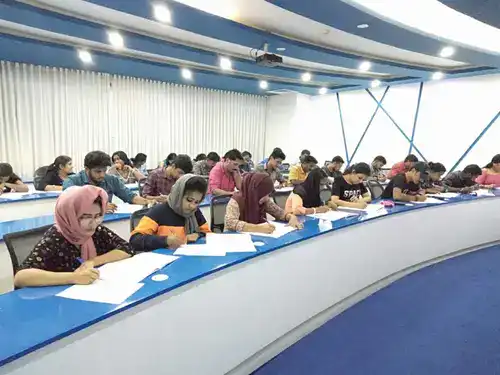
An HR certification course is a structured programme that trains you in the working functions of human resources — recruitment, onboarding, payroll, statutory compliance, performance management and employee relations — and awards a credential when you complete it. In India, IHRA’s I-CGHR is a 4-month HR certification course covering 60+ HR modules and 22+ HR software tools, with a 100% Placement Guarantee.
IHRA is an Advanced HR Training Institute with International Certification. It teaches the I-CGHR from its Koramangala campus in Bengaluru and as Live Online classes for candidates anywhere in India. This page explains what HR certification actually is, the types available in India, who needs one, what a good course has to contain, how the I-CGHR fits, and what happens to your career afterwards — so you can judge any HR certification course on substance rather than on its brochure.
See the I-CGHR certification, the full software list and IHRA’s placement outcomes in one place.
What Is an HR Certification?
An HR certification is formal evidence that you have been trained and assessed in a defined body of HR work. The word covers a wide range in practice — from a certificate you receive after watching a few hours of video, to a credential issued after months of live training, software practice and assessment. What the certificate is worth depends entirely on what sat behind it.
A useful way to think about it: a good HR certification tells an employer what you can do on the first working day — run a payroll cycle, file a PF return, move a candidate through an applicant tracking system, close an appraisal round. The stronger certifications in India are built around that promise, and they are judged on it in interviews.
That is also why the phrase “HR certification course” matters more than “HR certificate”. The course is the thing that changes what you are able to do. The certificate is the record of it.
Types of HR Certification in India
Most HR certifications available to Indian candidates fall into one of five groups. They are not interchangeable, and knowing which group a course belongs to tells you most of what you need to know about it.
1. Generalist practitioner certifications
Cover the full employee lifecycle end to end and are aimed at making you employable as an HR executive or generalist. IHRA’s I-CGHR sits in this group. Typically instructor-led, several months long, with hands-on software work.
2. Function-specific certifications
Go deep on one area — payroll, recruitment, compensation and benefits, PoSH, L&D, HR analytics. Useful once you already work in HR and want to specialise; narrow as a first credential.
3. HR software certifications
Tied to a specific system — Workday HCM, SAP HCM / SuccessFactors, Oracle HRMS, an HRIS or ATS. Valued highly by employers who run that system. A generalist course that includes several of these tools gives you the same skills without locking you to one vendor.
4. Exam-based professional credentials
Issued by professional bodies after a proctored exam, usually with an experience requirement to sit it. Strong signals for mid-career professionals; not designed to teach a fresher the job from scratch.
5. Free and self-paced online certificates
Recorded videos and a quiz, with a completion certificate at the end. Good for testing whether HR interests you at all. They rarely include software practice, live doubt-clearing or any job outcome.
If your goal is a first HR job or a move into HR from another field, group 1 is where to look. If you already hold an HR role and want to sharpen one function, groups 2 and 3 are the natural next step. For a wider explanation of the whole category, our guide to the meaning and scope of an HR course starts from first principles.
Who Needs an HR Certification Course?
- Freshers and final-year students from any stream who want to walk into their first HR interview already knowing how payroll, compliance and recruitment actually run.
- Career switchers from operations, admin, customer support, sales, teaching or banking — people who have managed teams or processes and want the HR-specific toolkit to go with it.
- Working HR professionals who learned one function on the job — usually recruitment or admin — and need the other five plus the software to move up.
- Returning professionals re-entering work after a break, who need a current, recognised credential and recent hands-on practice on their CV.
- Founders and small-business owners running payroll and statutory filings themselves who want to stop relying on guesswork.
The common thread is that all five groups are judged, at interview, on whether they can do the work rather than on whether they have heard of it. That is exactly the gap a practical HR certification course closes.
What a Good HR Certification Course Covers
Syllabi look alike on paper. The difference is in depth and in whether each topic is taught inside real software. A course worth paying for covers all six HR functions, teaches the tools those functions run on, and prepares you for the hiring process itself. IHRA’s I-CGHR runs to 60+ HR modules across four months, grouped like this:
Recruitment & Talent Acquisition
Manpower planning, job descriptions, sourcing, screening, interview coordination, offer roll-out and joining formalities — run inside an ATS.
Onboarding & Core HR Operations
Documentation, induction, HR letters, employee records, attendance and leave policy, HR MIS reporting, transfers and exits.
Payroll & Compensation
CTC structuring, salary breakup, attendance input, reimbursements and deductions, payroll processing cycles and payslip generation.
Statutory Compliance
PF, ESI, gratuity and professional tax — how each is computed, filed and evidenced. Our HR compliance training guide goes deeper on this block.
Performance Management
KPI and OKR design, appraisal cycles, 360-degree feedback, calibration, and connecting ratings to increments.
Employee Relations, AI & Analytics
Grievance and disciplinary process, engagement surveys, exit analysis, AI for HR workflows, HR automation, dashboards, plus MS Office 365 skills.
Then there is the software. IHRA’s programme covers 22+ HR software tools, including Workday HCM, SAP HCM / SAP SuccessFactors, Oracle HRMS, HRIS and payroll software, ATS and recruitment software, PMS software, HR employee survey software, a statutory compliance portal, and AI and automation tools for HR. Alongside the functional modules sit interview preparation, CV building, LinkedIn profile building and an AI-powered ATS-friendly resume builder that enrolled students use free.
Online HR Certification Courses: What Changes and What Doesn’t
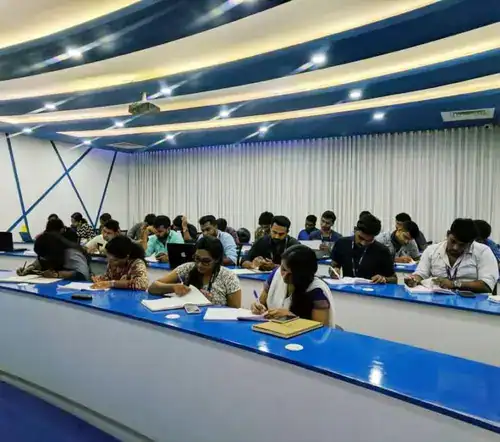
A large share of people searching for an HR certification course want to do it online, usually because they are working or studying somewhere without a strong training institute nearby. The good news is that the substance of an HR certification course transfers to a live online format almost completely. Payroll is software; compliance filing is software; recruitment runs in an ATS. None of that needs a physical room.
What separates a good online HR certification course from a weak one is the same list that separates good classroom courses from weak ones, plus two extra checks:
- Live, not just recorded. A recorded course cannot answer the question you have at 8 pm about why a PF calculation came out wrong. Live Online classes with a trainer can.
- Real software access, not screenshots. Ask whether you will log into the HRIS, ATS and payroll tools yourself or watch someone else do it.
IHRA runs the same I-CGHR programme as Live Online classes for candidates across India — same 60+ modules, same 22+ tools, same trainers, same 100% Placement Guarantee — alongside classroom batches at its Koramangala campus in Bengaluru. Candidates who want the campus route usually start with the HR courses in Bangalore page; candidates in Chennai, Pune and Hyderabad have their own pages covering the Live Online option.
Watch more HR training videos on IHRA’s YouTube channel →
Not sure whether classroom or Live Online suits you? Start with IHRA’s course and certification overview.
IHRA’s I-CGHR: Where It Fits
The I-CGHR — Internationally Certified Generalist in Human Resource — is IHRA’s flagship HR certification. It is awarded on completion of the 4-month programme described above, and IHRA is internationally affiliated and accredited. In the five-group map earlier on this page it belongs squarely in the first group: a generalist practitioner certification designed to make you employable across the HR function, not in one corner of it.
Three things define how the I-CGHR is built:
- Scope. All six HR functions, across 60+ modules, rather than a single specialism.
- Software. 22+ HR tools, practised hands-on, including the enterprise systems that appear in job descriptions — Workday HCM, SAP HCM / SuccessFactors, Oracle HRMS.
- Outcome. A 100% Placement Guarantee, with interview preparation, CV and LinkedIn profile building and the ATS-friendly resume tool built into the four months rather than added at the end.
If you want the enrolment process laid out step by step, read how to get HR certified in India. If you are weighing the I-CGHR against the broader HR management syllabus, the HR management course page walks through the same programme from that angle.
How to Choose an HR Certification Course
Whatever institute you are considering, put the same six questions to it. The answers sort the market quickly.
1. Which HR functions does it cover, and how many modules? A number you can check against the syllabus, not an adjective.
2. Which software tools will I log into myself? Ask for the list by name. If the answer is “HR software” with no names, keep asking.
3. Who teaches it? Practising HR professionals teach the exceptions that come up in real work; a script teaches the rule.
4. What exactly is promised at the end, in writing? IHRA’s answer is a 100% Placement Guarantee.
5. Is it live? Classroom or Live Online with a trainer, or recorded videos you watch alone.
6. What do I leave with beyond the certificate? A CV, a LinkedIn profile, interview practice and tools you keep using in the job search — or a PDF.
Once you have those answers from two or three institutes, comparing them is straightforward. If you want to see that comparison worked through against real providers, our page on the best HR certification course online does exactly that. For a broader look at how to judge an institute itself — trainers, batch sizes, mode — see choosing an HR training institute in India.
Career Outcomes After an HR Certification Course
A generalist HR certification opens a set of roles rather than a single title. Which one you land depends on the part of the syllabus you take furthest and on the employer you join:
- HR Executive / HR Generalist — the standard entry point; touches every function.
- Recruiter / Talent Acquisition Specialist — for candidates who take to sourcing and the ATS.
- Payroll Specialist and Compensation & Benefits Analyst — the numbers-first profile.
- HRIS Analyst — the systems-and-data side; see our HRIS course page for that track.
- HR Compliance Officer — for candidates who enjoy the statutory side.
- L&D Specialist — training and development; our guide to careers in HR training and development covers it.
- HR Business Partner and People Analytics Specialist — usually after a few years in one of the roles above.
At IHRA the programme ends with a 100% Placement Guarantee. The run-up to it — interview preparation, CV building, LinkedIn profile building and the ATS-friendly resume builder — is scheduled inside the four months, so you are interviewing with a finished profile rather than assembling one afterwards.
Duration, Fees and Admissions
The I-CGHR runs for four months. HR certification course fees in India vary widely with mode, duration and how much hands-on software access is included, so a headline number means little without the syllabus and tool list beside it. For IHRA’s current fee, instalment options and the next batch dates, contact admissions directly:
IHRA — International Human Resource Academy
1st Floor, Guru Plaza, Above TVS Motors, Sidharata Colony, Madiwala, Koramangala 2nd Block, Bengaluru, Karnataka 560068
Phone / WhatsApp: 9400785899
Email: ihrahelpline@gmail.com
Ready to put the I-CGHR through the six questions above? Everything you need is on one page.
HR Certification Course FAQs
What is an HR certification course?
An HR certification course is a structured training programme in the working functions of human resources — recruitment, onboarding, payroll, statutory compliance, performance management and employee relations — that awards a credential on completion. The practical ones teach each function inside real HR software and attach a job outcome; IHRA’s I-CGHR does both over four months.
Which certification is the best for HR?
For someone entering HR or moving into it, the best certification is a generalist one that covers the full employee lifecycle, includes hands-on time in HRIS, payroll, ATS and PMS software, and is tied to a job outcome. IHRA’s I-CGHR is built on exactly that basis: 4 months, 60+ HR modules, 22+ HR software tools and a 100% Placement Guarantee.
Which HR certificate is best?
Judge an HR certificate on what sat behind it: how many HR functions it covers, whether you practised in real software or only watched, and what happens after the certificate is issued. A certificate from a live, software-led generalist programme travels further in interviews than one from a recorded course. IHRA awards the I-CGHR — Internationally Certified Generalist in Human Resource — on completion of its 4-month programme.
Is an online HR certification course worth it in India?
Yes, provided it is live and software-led rather than recorded. The substance of HR work — payroll, compliance filing, recruitment in an ATS — is done in software, so it transfers fully to a Live Online class with a trainer. IHRA runs the same I-CGHR programme online and in the classroom, with the same 60+ modules, 22+ tools and 100% Placement Guarantee either way.
How long does an HR certification course take?
Anywhere from a few hours for a self-paced video certificate to several months for an instructor-led practitioner programme. IHRA’s I-CGHR is a four-month structured programme covering 60+ HR modules and 22+ HR software tools, available as classroom training at its Bengaluru campus and as Live Online classes.
Can I join HR after 12th?
You can start learning HR after 12th, and a practical HR certification course will teach you the functional work regardless of your current qualification. Be aware, though, that most corporate HR roles in India screen for a completed graduate degree at the application stage, so the usual route is to complete graduation in any stream and use an HR certification course to add the functional and software skills the degree does not cover.
Does IHRA’s HR certification course include placement?
Yes. The I-CGHR carries a 100% Placement Guarantee, and the preparation for it — interview preparation, CV building, LinkedIn profile building and an AI-powered ATS-friendly resume builder — is built into the four-month programme rather than offered separately afterwards.
What salary can I expect after the program?
Salary ranges from around ₹40,000 to ₹1.5 lakh per month based on your profile — your qualification, prior experience, the role you move into and the employer you join.
 Previous Post
 Next Post