


HR’s role in employee training and development is to run the full learning cycle — spotting skill gaps, designing the right program, delivering it, and checking whether performance actually improved. In most Indian companies this sits with an HR Generalist; larger organisations hand delivery to a dedicated Learning & Development (L&D) team instead.
See how IHRA’s own I-CGHR program builds every stage of this cycle into one 4-month course.
The HR Training and Development Cycle
Whoever owns it in a given company, the work runs through four repeatable stages:
- Needs analysis — reading performance appraisals, manager requests, and one-on-one conversations to find the real skill gap, not just the loudest complaint.
- Program design — turning that gap into a curriculum: which modules to cover, which software to train on, and whether an internal trainer or an e-learning module does the job better.
- Delivery — running the session through classroom instruction, on-the-job coaching, or a blended mix, depending on the audience and the skill being built.
- Evaluation — comparing performance before and after, usually through the same appraisal or performance-management data that flagged the gap in the first place.
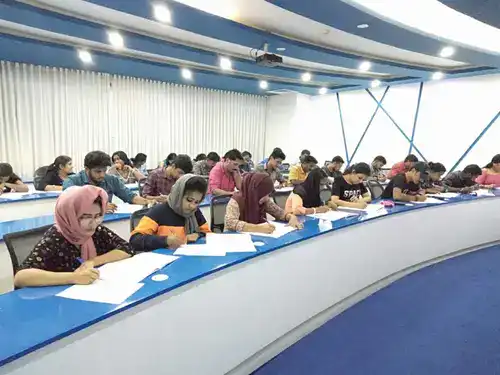
This is the same cycle IHRA’s own I-CGHR program is built around — not as a one-off workshop, but as the model students learn to run themselves once they’re placed in an HR role. For the fuller picture of what training and development means and why it matters to a business, read IHRA’s complete guide to HR training and development.
Explore the full I-CGHR curriculum before you shortlist any HR program.
What an HR Generalist Specifically Owns in Training and Development
In a small or mid-size Indian company, one HR Generalist typically owns all four stages above. In practice that means running the training needs analysis alongside department heads, building the training calendar, coordinating with an external trainer or software vendor, tracking who has actually completed the training, and feeding the outcome back into the next appraisal cycle. Nobody hands this to the Generalist as a finished job description — it gets pieced together from recruitment, onboarding, and performance-review work that was already theirs.
This is exactly the skill set IHRA — an Advanced HR Training Institute with International Certification — builds into its 4-month I-CGHR program, through 60+ HR modules and 22+ HR software tools including PMS, HRIS, and AI-based HR automation, backed by a 100% Placement Guarantee. See IHRA’s HR certification courses and the I-CGHR program in detail for the full curriculum.
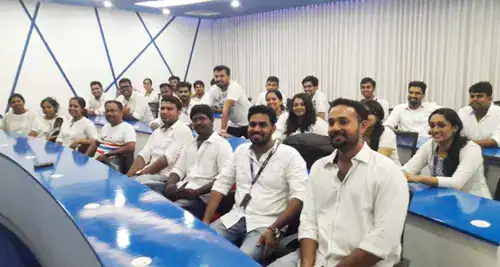
HR Generalist vs a Dedicated L&D Role: Who Owns What
Once a company grows large enough to run training as a full-time job rather than a side task, it often splits off into its own Learning & Development (L&D) role. Ownership then tends to split like this:
- HR Generalist — owns the needs analysis, links training back to appraisals, and keeps handling recruitment, onboarding, payroll coordination, and compliance alongside it.
- L&D Executive / Manager — owns program design, delivery, and vendor or LMS management, and reports training outcomes back to the HR Generalist or HR Business Partner.
Where there’s no separate L&D role — true for most small and mid-size Indian employers — the HR Generalist owns both halves, which is exactly why IHRA’s program teaches the full cycle rather than just one half of it.
IHRA’s PMS software training module covers the same KPI, OKR, and 360-degree appraisal data that HR uses to evaluate whether training actually worked:
Watch more HR training videos on IHRA’s YouTube channel →
Frequently Asked Questions
What is the role of HR in training and development?
In practice, this role sits with the HR Generalist for most Indian small and mid-size companies — they run the needs analysis, coordinate the training calendar with department heads, track who has completed what, and feed the results back into appraisals. Once a company is large enough to have a dedicated Learning & Development (L&D) team, that team takes over program design and delivery while the HR Generalist keeps ownership of the underlying employee data and the link to performance management.
What are the functions of training and development in HR?
Four functions repeat across almost every HR team: training needs analysis (spotting the gap through appraisals, 360-degree feedback, or a manager’s request), program design (building the curriculum and picking a vendor or software), delivery (classroom, on-the-job, or an LMS), and evaluation (comparing performance before and after through the same appraisal or PMS data that flagged the gap). An HR Generalist typically owns all four in a smaller organisation; a specialist L&D role owns design and delivery once the company splits the function out.
What is training and development in HR?
Training builds a specific skill for a person’s current role; development builds broader capability for a future one. HR runs both under one umbrella because the same needs-analysis and appraisal data feeds both — see IHRA’s complete guide to HR training and development for the fuller breakdown of how the two halves work.
What salary can I expect after the program?
Salary ranges from around ₹40,000 to ₹1.5 lakh per month based on your profile — your qualification, prior experience, the role you move into and the employer you join.
Ready to build the skill set that owns this whole cycle, not just one half of it?
Training and development is one piece of a broader HR career. Explore IHRA’s full HR certification courses to start building this skill set with a 100% Placement Guarantee behind it.
 Previous Post
 Next Post