

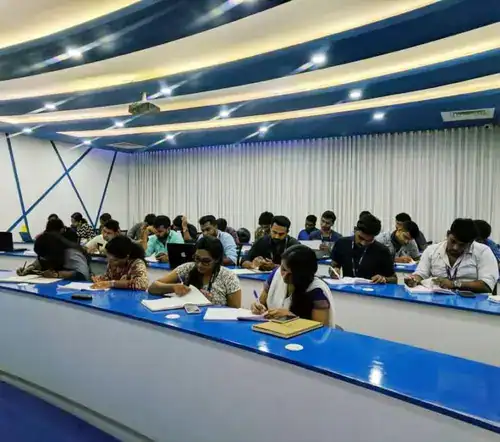
An HR generalist handles the whole employee lifecycle — recruitment, onboarding, payroll, statutory compliance, performance management and employee relations — rather than one narrow function. An HR generalist course trains you for that breadth. IHRA’s I-CGHR, the Internationally Certified Generalist in Human Resource, is a 4-month HR generalist course: 60+ HR modules, 22+ HR software tools, 100% Placement Guarantee.
IHRA is an Advanced HR Training Institute with International Certification, teaching from its Koramangala campus in Bengaluru and as Live Online classes across India. This page covers the HR generalist meaning in plain terms, how a generalist differs from a specialist, the roles and responsibilities you will actually be given, what a generalist course has to teach to be worth the name, who it suits, and the route from where you are today to your first HR generalist role.
See the I-CGHR generalist certification, the full software list and IHRA’s placement outcomes in one place.
What Is an HR Generalist?
The HR generalist meaning is in the word itself. A generalist is the person in an HR team who does not own one function but touches all of them. On a Monday they might close a hiring round in the ATS; on Tuesday, run the attendance input for payroll; on Wednesday, file a PF return; on Thursday, chase managers for appraisal ratings; on Friday, sit in on a grievance meeting. Nothing on that list is optional, and nobody else is going to do it for them.
That breadth is why the generalist is the standard entry point into HR in India. Most companies with a headcount under a few hundred run their entire people function on one or two generalists. Larger companies have specialist teams, but they still hire generalists as HR executives and HR business partners to be the single point of contact for a business unit. Either way, the job description asks for the same thing: someone who can run every part of the employee lifecycle competently, in the software the company uses, without being walked through it.
HR generalist, in one line: the HR professional responsible for the full employee lifecycle, from hiring to exit, across recruitment, onboarding, payroll, compliance, performance and employee relations.
Key facts
- Covers all six core HR functions rather than one
- The usual first role in HR: HR Executive and HR Generalist are often the same job with different titles
- Works inside HRIS, payroll, ATS and PMS software daily
- Reports to an HR Manager or, in smaller companies, directly to the founder or operations head
- The base from which specialist and HR business partner roles are reached later
HR Generalist vs HR Specialist: What Actually Differs
A specialist goes deep on one function — a payroll specialist, a talent acquisition specialist, a compensation and benefits analyst, an L&D lead. A generalist goes wide across all of them. Neither is a junior version of the other; they are different shapes of career, and most HR professionals move between the two shapes more than once.
HR Generalist
- Owns the whole employee lifecycle for a team or company
- Works across HRIS, payroll, ATS, PMS and compliance portals
- Hired by companies of every size; the only HR role in most small ones
- The typical first job in HR and the base for HR Manager and HRBP roles
- Judged on breadth: can you run every function without supervision?
HR Specialist
- Owns one function in depth: payroll, recruitment, C&B, L&D, analytics
- Works mainly in the software for that function
- Hired mostly by mid-size and large companies with structured HR teams
- Usually reached after a generalist stint, or from a related field
- Judged on depth: are you the person others come to for that function?
For a first HR job, or a move into HR from another field, the generalist route is the practical one, for a simple reason: it is the role most companies are actually hiring for at entry level, and it teaches you which function you want to specialise in later by making you do all of them first. That is why the I-CGHR is built as a generalist certification, and why IHRA’s broader HR certification course guide places it in the generalist practitioner group.
HR Generalist Roles and Responsibilities
Job descriptions for HR generalist roles vary in wording, but the work underneath them is remarkably consistent. If you take the six core HR functions and ask what a generalist does in each, you get the list below — and, not by coincidence, the outline of what an HR generalist course has to teach.
Recruitment & Talent Acquisition
Manpower planning with managers, writing job descriptions, sourcing and screening, coordinating interviews, rolling out offers and completing joining formalities — tracked inside an ATS.
Onboarding & HR Operations
Documentation and induction, HR letters, employee records in the HRIS, attendance and leave administration, HR MIS reporting, transfers, confirmations and exit formalities.
Payroll & Compensation
CTC structuring and salary breakup, monthly attendance and deduction inputs, reimbursements, running the payroll cycle, generating payslips and answering the queries that follow.
Statutory Compliance
PF, ESI, gratuity and professional tax: computing each, filing on time through the compliance portal, and keeping the records an auditor will ask for.
Performance Management
Setting up KPIs and OKRs with managers, running the appraisal cycle in the PMS, coordinating 360-degree feedback, and connecting ratings to increments and promotions.
Employee Relations & Engagement
Grievance handling and disciplinary process, policy communication, engagement surveys and their follow-up, exit interviews and attrition analysis.
Two responsibilities cut across all six. The first is HR software: every function above runs inside a system, and a generalist is expected to work in the HRIS, the payroll tool, the ATS and the PMS without hand-holding. The second is reporting: headcount, attrition, hiring pipeline and payroll cost summaries go to management every month, which is where MS Office skills and, increasingly, AI tools for HR earn their place on the syllabus.
What IHRA’s I-CGHR Teaches, and Why It Is a Generalist Course
The I-CGHR — Internationally Certified Generalist in Human Resource — has the word in its name for a reason. It is IHRA’s flagship program, structured over four months to cover every function on the list above, in the software each function runs on, and to end with a job. IHRA is internationally affiliated and accredited, and the I-CGHR is awarded on completion. The full program page is at I-CGHR: Internationally Certified Generalist in Human Resource; here is what makes it a generalist course rather than a bundle of short modules.
60+ HR modules across all six functions
Recruitment and talent acquisition, onboarding and HR operations, payroll and compensation, statutory compliance, performance management, and employee relations are each taught as working processes: the sequence of steps, the documents produced at each step, the mistakes that come up, and how to fix them. No function is a one-hour overview. That is the difference between knowing HR has a payroll function and being able to run one on your first working day.
22+ HR software tools, practised hands-on
A generalist is only as employable as the systems they can work in. The I-CGHR covers Workday HCM, SAP HCM / SAP SuccessFactors and Oracle HRMS — the enterprise systems that appear by name in HR generalist job descriptions — alongside HRIS and payroll software, ATS and recruitment software, PMS software for KPIs, OKRs and 360-degree appraisals, HR employee survey software, a statutory compliance portal, and AI and automation tools for HR. You log in and do the work yourself, rather than watching a screen recording.
AI for HR and MS Office 365
The reporting and communication half of a generalist’s week runs on spreadsheets, documents, presentations and, increasingly, AI tools that draft policies, summarise survey responses and build dashboards. Both are taught inside the program rather than assumed.
Job readiness inside the four months
Interview preparation, CV building, LinkedIn profile building and an AI-powered ATS-friendly resume builder (free to enrolled students) are scheduled inside the program. The I-CGHR carries a 100% Placement Guarantee. For how that works in practice, see IHRA’s HR course with placement page.
| Program | Duration | Modules | Software tools | Also included | Formats | Outcome | Credential |
|---|---|---|---|---|---|---|---|
| I-CGHR (Internationally Certified Generalist in Human Resource) | 4 months | 60+ | 22+ (incl. Workday HCM, SAP HCM/SuccessFactors, Oracle HRMS, ATS, PMS, HRIS & payroll) | AI for HR, MS Office 365, interview preparation, CV and LinkedIn profile building | Live Online; classroom in Koramangala, Bengaluru | 100% Placement Guarantee | Internationally affiliated and accredited |
Want the full module list and the next batch dates? Start from IHRA’s homepage.
Who an HR Generalist Course Is For
- Freshers and final-year students from any stream who want their first job to be in HR and want to walk into the interview already knowing how payroll, compliance and recruitment run.
- Career switchers from operations, admin, customer support, sales, teaching or banking. If you have managed people or processes, you already have half of what a generalist role needs; the course supplies the HR-specific other half.
- HR professionals stuck in one function, usually recruitment or admin, who need the other five functions and the software to move to an HR Executive or HR Generalist title.
- Returning professionals re-entering work after a break who need a current credential and recent hands-on practice on their CV.
- Founders and small-business owners who are, in effect, their company’s HR generalist already and want to stop guessing at PF filings and appraisal design.
What these groups share is that they will be assessed at interview on breadth: can you handle whatever comes across the HR desk this week? A specialist certification does not answer that question. A generalist course does.
How to Become an HR Generalist
There is no single mandated route into HR in India, but the path that works reliably has five steps. Most people who are hired as HR generalists without HR experience have followed some version of it.
1. Complete your graduation in any stream. Most corporate HR roles screen for a completed graduate degree at the application stage. The stream matters far less than employers’ job descriptions suggest; HR generalists come from commerce, arts, science and engineering backgrounds alike.
2. Learn all six HR functions as working processes, not theory. This is what an HR generalist course is for. Choose one that names its modules and its software tools, and that puts you in the software yourself. The I-CGHR does this over four months.
3. Get hands-on time in the systems employers name. HRIS, payroll, ATS and PMS at minimum; Workday HCM, SAP SuccessFactors or Oracle HRMS if you are aiming at larger employers. Being able to say “I have processed a payroll run in this tool” changes an interview.
4. Build the job-search assets before you need them. An ATS-friendly CV, a LinkedIn profile that reads like an HR professional’s, and practised answers to the standard HR interview questions. IHRA builds these inside the program rather than after it.
5. Take the first generalist role and use it to find your specialism. HR Executive and HR Generalist titles are where most HR careers start. Two or three years in, you will know whether you want to go deep (payroll, talent acquisition, C&B, analytics) or stay wide (HR Manager, HR Business Partner).
At IHRA, steps 2 through 4 are the I-CGHR itself, and step 5 begins with the 100% Placement Guarantee. Candidates who want the classroom route in Bengaluru usually start from the HR courses in Bangalore page; everyone else takes the same program as Live Online classes.
Career Growth After an HR Generalist Course
The generalist role is a base, not a ceiling. Because you have handled every function, you can move in more directions than a specialist can:
- HR Executive / HR Generalist — the entry title; owns the lifecycle for a team or a small company.
- Senior HR Generalist / Assistant HR Manager — the same scope with more headcount, more judgement calls and often a junior to supervise.
- HR Manager — runs the function for a company or a location; the natural destination for people who stay generalist.
- HR Business Partner — the generalist embedded in a business unit at a larger company, advising its leaders on people decisions.
- Specialist tracks — payroll and compliance, talent acquisition, compensation and benefits, L&D, HRIS, people analytics. Each opens naturally from the generalist seat once you know which function you take to.
Pay follows the same arc: it rises with the scope you handle, the size of the employer and the systems you can work in unaided. That last point is why hands-on software training matters more to a generalist’s earning path than most people expect when they start.
Duration, Fees and Admissions
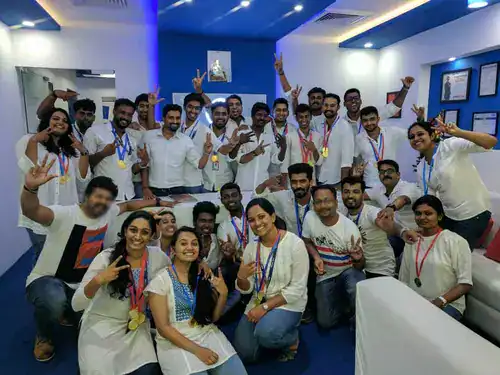
The I-CGHR runs for four months, as classroom training at IHRA’s Koramangala campus in Bengaluru and as Live Online classes for candidates anywhere in India. Fees depend on the batch and mode, so a headline number on a page means little without the module list and tool list beside it. For the current fee, instalment options and the next batch dates, contact admissions directly:
IHRA — International Human Resource Academy
1st Floor, Guru Plaza, Above TVS Motors, Sidharata Colony, Madiwala, Koramangala 2nd Block, Bengaluru, Karnataka 560068
Phone / WhatsApp: 9400785899
Email: ihrahelpline@gmail.com
Ready to train as an HR generalist? The I-CGHR, the software list and the placement guarantee are all on one page.
HR Generalist Course FAQs
What is an HR generalist?
An HR generalist is the HR professional who handles the whole employee lifecycle rather than one function: recruitment, onboarding, payroll, statutory compliance, performance management and employee relations. It is the standard entry role in HR in India, and in smaller companies it is often the only HR role. IHRA’s I-CGHR trains for this breadth over four months.
What does HR generalist mean, and how is it different from an HR executive?
HR generalist means an HR professional with responsibility across all core HR functions instead of a single specialism. In most Indian companies, HR Executive and HR Generalist describe the same job under different titles; both handle hiring, onboarding, payroll inputs, compliance filings, appraisals and employee queries for their team or company.
What is the HR generalist course?
An HR generalist course trains you to handle the whole employee lifecycle — recruitment, onboarding, payroll, performance management, compliance and HR analytics — rather than one narrow function. At IHRA, the I-CGHR covers this in 4 months across 60+ HR modules and 22+ HR software tools, with Live Online and Bengaluru classroom batches and a 100% Placement Guarantee.
What are the roles and responsibilities of an HR generalist?
An HR generalist recruits and onboards employees, maintains records in the HRIS, prepares payroll inputs and runs the payroll cycle, files PF, ESI and other statutory returns, runs the appraisal cycle in the PMS, handles grievances and engagement, manages exits, and reports headcount, attrition and hiring numbers to management every month. Working in HR software and producing reports run through all of these.
Is there an HR generalist certification in India?
Yes. IHRA awards the I-CGHR, the Internationally Certified Generalist in Human Resource, on completion of its 4-month program. IHRA is internationally affiliated and accredited. The certification covers all six HR functions across 60+ modules and includes hands-on practice in 22+ HR software tools, including Workday HCM, SAP SuccessFactors and Oracle HRMS.
Can a fresher become an HR generalist?
Yes. The HR generalist or HR executive role is where most HR careers in India begin, and employers hire freshers into it when they can show working knowledge of the six HR functions and hands-on time in HR software. That is the gap a practical HR generalist course closes, and at IHRA the I-CGHR ends with a 100% Placement Guarantee.
How does an HR generalist’s salary and career grow?
Salary ranges from around ₹40,000 to ₹1.5 lakh per month based on your profile — your qualification, prior experience, the role you move into and the employer you join. Career progression usually runs from HR Executive or HR Generalist to Senior Generalist or Assistant HR Manager, then to HR Manager or HR Business Partner, with specialist tracks in payroll, talent acquisition, compensation, L&D or analytics opening along the way.
 Previous Post
 Next Post