


A real HR training program covers core HR functions (recruitment, payroll, performance management, compliance), hands-on practice on 20+ HR software tools, AI and automation skills, and soft-skills coaching — not just lecture-based theory. A well-structured program such as IHRA’s I-CGHR spans 60+ modules over 4 months, moving from HR fundamentals to software mastery to placement-ready interview practice.
See the full structure behind IHRA’s HR training program — courses, modules, and placement outcomes.
What a Well-Built HR Training Program Actually Covers
Most people typing “HR training program” into Google already know HR is a career option — what they can’t tell from a landing page is what actually happens inside one. The honest answer is that a well-built program is built around four layers, not one long list of topics. The best place to see this in action is inside a real HR training institute — like IHRA, an Advanced HR Training Institute with International Certification — where the curriculum is deliberately structured, not assembled from whatever content was easiest to produce.
- Core HR functions — recruitment and onboarding, payroll and statutory compliance, performance management, employee relations, and day-to-day HR operations.
- HR software tools — hands-on training on the platforms companies actually run on: Workday HCM, SAP HCM/SAP SuccessFactors, Oracle HRMS, HRIS & payroll systems, ATS/recruitment software, Performance Management System (PMS) software, and employee survey software.
- AI & automation for HR — using AI inside real recruitment, resume-screening, and reporting workflows, not just discussing AI as a concept.
- Soft skills & job-readiness — MS Office 365 skills, interview preparation, and career-document support such as CV and LinkedIn profile building.
None of these four layers works well on its own. A candidate who only learns core HR theory can talk about recruitment but can’t operate the ATS a hiring manager actually uses. A candidate who only learns software can run a dashboard but can’t explain the HR logic behind it. This is why the most useful way to judge any HR training program — not just IHRA’s — is to check whether it teaches all four layers together, in one sequence, rather than selling them as separate add-on courses.
How I-CGHR Is Structured: 60+ Modules, 22+ Software Tools
I-CGHR — Internationally Certified Generalist in Human Resource — is IHRA’s flagship program, and it is what the four layers above actually look like once they’re put together into a single curriculum. It runs across 4 months and covers 60+ HR modules and 22+ HR software tools, sequenced from HR basics through to advanced, software-heavy, placement-ready content rather than dropped in all at once.
The software stack alone spans a dedicated SAP HCM & SAP SuccessFactors training module and a full Workday HCM hire-to-retire walkthrough, alongside Oracle HRMS, HRIS & payroll, ATS/recruitment software, PMS software, employee survey software, and a statutory compliance portal — the same enterprise tools HR teams are actually expected to operate on day one of a job, not simplified classroom versions of them.
Every module maps back to a real function inside an HR department, and every software tool is one a candidate is likely to be asked about in an interview. That combination — breadth across modules, depth across tools — is what separates a structured program from a short, single-topic certificate.
The sequencing matters as much as the content. Early modules build HR fundamentals — recruitment, onboarding, payroll basics, and statutory compliance — before the program moves into software-heavy modules on Workday, SAP HCM, Oracle HRMS, and HRIS. AI & automation for HR and the interview-preparation modules sit toward the end, once a candidate already has the functional and software base those skills build on. Candidates finish with the I-CGHR certification and the 100% Placement Guarantee that IHRA attaches to the whole program — not to any single module sold separately.
Compare IHRA’s 60+ module, 22+ software-tool structure against any other HR training program before you enroll.
What “Practical” Training Looks Like Day to Day
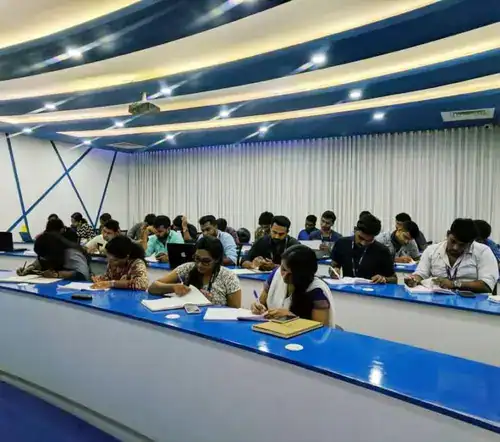
Almost every HR institute in India uses the word “practical” somewhere on its homepage. What it actually means, inside a genuinely hands-on program, is that a typical week looks less like a lecture hall and more like a working HR software floor:
- Live labs on real recruitment, payroll, and performance-management dashboards — not screenshots or slide walkthroughs.
- Resume-building and mock-interview sessions using IHRA’s AI-powered, ATS-friendly resume tool, offered free to enrolled students.
- Classroom sessions at IHRA’s Koramangala, Bengaluru campus, combined with Live Online classes for students joining from anywhere in India.
- Module-by-module checkpoints, so software skills are tested as they’re taught rather than only at the very end of the program.
Watch more HR training videos on IHRA’s YouTube channel →
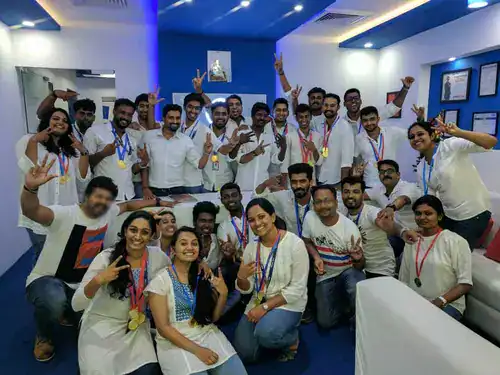
This is also where the 100% Placement Guarantee connects back to the structure, not just the marketing. A program that has already put a candidate through 60+ modules, 22+ software tools, and repeated mock-interview practice is placing someone who has actually done the work the interview is testing for — which is the entire reason IHRA, an Advanced HR Training Institute with International Certification, builds the program this way instead of shortening it.
Ready to see the full I-CGHR curriculum and the 100% Placement Guarantee behind it?
Frequently Asked Questions
What training is offered for HR?
A complete HR training program typically covers recruitment and onboarding, payroll and statutory compliance, performance management, and employee relations, alongside hands-on training on HR software like Workday, SAP HCM, Oracle HRMS, HRIS, ATS/recruitment tools, and PMS software. IHRA’s I-CGHR program brings all of this together in 60+ modules across 22+ software tools inside one 4-month program, rather than teaching each piece separately.
What are the types of training in HR?
HR training generally falls into classroom/instructor-led sessions, hands-on software labs, on-the-job or live-project practice, and blended programs that combine offline and online delivery. IHRA runs a blended model — classroom sessions at its Koramangala, Bengaluru campus combined with Live Online classes — so the same structured curriculum is available whether a candidate attends in person or remotely.
What are the modules of HR?
HR modules are usually grouped into recruitment and talent acquisition, payroll and statutory compliance, performance management, employee engagement, HR information systems, and increasingly AI and automation for HR. IHRA’s I-CGHR organizes 60+ modules across exactly these groups, each paired with the software tool used for that function in a real company.
Which 3-month course is best?
Duration alone doesn’t tell you whether a course is good — a 3-month course can only realistically cover a narrow slice of core HR functions, software tools, and interview preparation. Before picking by duration, check what’s actually included: how many modules, how many software tools, and how much live-project or mock-interview practice is built in. IHRA’s I-CGHR runs 4 months specifically to cover 60+ modules and 22+ software tools without cutting any of them short.
What salary can I expect after the program?
Salary ranges from around ₹40,000 to ₹1.5 lakh per month based on your profile — your qualification, prior experience, the role you move into and the employer you join.
 Previous Post
 Next Post