

HR training and development is the process by which a company builds the skills employees need for the job they hold today, and prepares them for the roles they will hold tomorrow. HR identifies the gap, designs the learning, delivers it through classroom sessions, on-the-job coaching, or software-based courses, and then checks whether performance actually improved.
Want to see how a structured HR training program turns this theory into a real career?
Why Training and Development Matters to a Business
No company can hire its way out of every skill gap. New software gets adopted, compliance rules change, and employees who were hired for one role often need to grow into a bigger one within a year or two. Training and development is how a business closes that gap without constantly going back to the job market.
- Lowers hiring risk — an employee trained into a role costs less and carries less uncertainty than a fresh external hire
- Improves retention — people who see a real growth path are less likely to leave for a marginally better offer elsewhere
- Builds an internal promotion pipeline — so leadership and specialist roles don’t have to be filled from outside every time
- Keeps pace with technology — HR software, payroll systems, and AI tools change fast enough that skills go stale within a few years without refreshing them
- Reduces compliance risk — statutory and safety training isn’t optional in most industries, and untrained staff are the most common source of avoidable violations
The Two Halves: Training vs Development
People use “training and development” as one phrase, but the two words describe two different jobs.
Training
Training improves the skills an employee needs for the job they are doing right now. It’s specific, short, and measurable — learning a new HRIS module, getting certified on a compliance process, or picking up a software tool the team just adopted. You can usually tell within weeks whether training worked.
Development
Development prepares an employee for a role they don’t hold yet. It’s broader and slower — leadership exposure, cross-functional projects, mentoring, and structured career planning. Development pays off over years, not weeks, which is exactly why it’s the part companies skip first when budgets tighten — and the part that costs them the most later.
Who Owns Training and Development in a Company?
In most small and mid-size companies, one HR Generalist owns the whole cycle: spotting the skill gap from performance reviews and manager feedback, designing or sourcing the training, running it, and checking whether it moved the needle. In larger organisations, a dedicated Learning & Development (L&D) team takes over delivery, but the needs analysis and the link back to appraisals and compensation still sit with HR.
That’s also why “HR training and development” and “HR Generalist” overlap so much on paper — a generalist role is where most people doing this work actually sit day to day. IHRA’s own I-CGHR program is built as a generalist-first curriculum for exactly that reason; you can see the full course structure on the IHRA HR certification courses page.
IHRA trains HR Generalists to own recruitment, payroll, compliance, and training and development — not just one slice of it.
Common HR Training Methods
How training gets delivered matters almost as much as what’s being taught. Most companies use a mix of these four:
Classroom / Instructor-Led
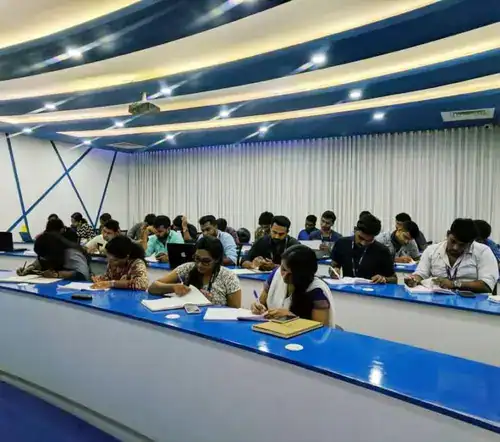
A trainer works with a group in person or live online, usually for software walkthroughs, soft-skills workshops, or anything that benefits from real-time questions. It’s the most expensive method per learner but the easiest to measure understanding on the spot.
Online / E-Learning
Self-paced modules, recorded video, or LMS-based courses that employees complete on their own schedule. Cheapest to scale across a large workforce, weakest for anything that needs hands-on correction.
On-the-Job Training
Learning by doing the actual work under supervision — shadowing, mentoring, or a structured probation period. Slower to design but the closest match between what’s taught and what’s needed.
Blended
A mix of the three above, usually classroom or online for concepts and on-the-job for application. Most well-run corporate training programs — IHRA’s included — run blended by default rather than picking one method for everything.
How to Tell If Training and Development Is Working
Most HR teams get the design and delivery right and then skip measurement entirely — which is exactly why training budgets are usually the first thing cut when finances get tight. A few practical signals work better than a satisfaction survey alone:
- Pre- and post-training skill assessments, not just a feedback form filled in on the way out
- Whether the specific task the training targeted actually got faster or more accurate afterward
- Manager sign-off 30–60 days later, not just attendance on the day itself
- Internal promotion rate for people who went through a development track versus those who didn’t
- Retention rate in the year after training — people who feel invested in tend to stay longer
None of this needs expensive analytics software to start tracking in a spreadsheet, though most of the HR platforms covered in a generalist program — HRIS and PMS tools in particular — build this reporting in by default.
What Training and Development Looks Like Inside a Real Program
IHRA is an Advanced HR Training Institute with International Certification, and the I-CGHR program is built around the same training-and-development logic described above, just compressed into a structured 4-month timeline: 60+ HR modules covering the full generalist scope, hands-on training across 22+ HR software tools (Workday HCM, SAP HCM/SuccessFactors, Oracle HRMS, HRIS & payroll, ATS/recruitment, PMS, employee survey software, and a statutory compliance portal), AI & automation for HR, MS Office 365 skills, and structured interview preparation — backed by a 100% Placement Guarantee.
Here’s a short walkthrough of one of the software modules taught inside the program, so you can see what “training” means in practice rather than in theory:
Watch more HR training videos on IHRA’s YouTube channel →
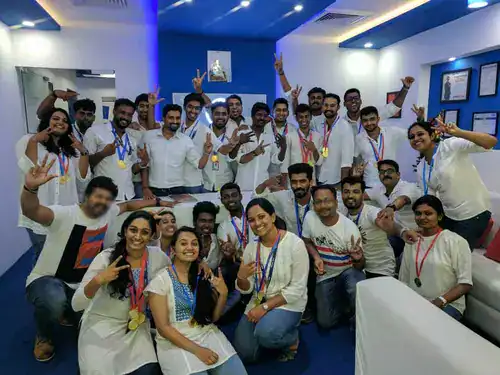
The “development” side shows up at the other end of the same program — a graduation and placement pipeline, not just a certificate mailed out at the end.
How Training and Development Builds a Career in HR
Once you’ve been through structured training and development yourself, the same skill set becomes a career path rather than a one-time program. People who start as HR Generalists often move into Training Coordinator, Learning & Development Executive, or HR Business Partner roles — each one still built on the same needs-analysis-to-evaluation cycle covered earlier in this guide, just applied at a larger scale. A fuller breakdown of these specific roles, titles, and salary bands is planned as a follow-up on this site.
FAQ: HR Training and Development
What is the role of HR in training and development?
HR identifies skill gaps through performance data and manager feedback, designs the learning plan, delivers it through classroom, on-the-job, or online methods, and then evaluates whether performance actually improved. In a small company, one HR Generalist handles all of this; in a larger one, a dedicated L&D team runs delivery while HR still owns the needs analysis and the link back to appraisals.
What are the 5 stages of training and development?
Most HR teams follow five stages: identifying the training need, setting clear objectives, designing the content and choosing a delivery method, running the training, and evaluating the result against those objectives. Skipping the first or last stage is the most common reason a training budget gets spent without any measurable change in performance.
Does training and development fall under HR?
Yes. Training and development is a core HR function, alongside recruitment, payroll, performance management, and compliance. Some larger organisations split it into a separate Learning & Development (L&D) team, but that team still reports into HR and works from the same employee data.
What are the functions of training and development in HR?
The main functions are training needs analysis, program design, delivery — through trainers, e-learning, or on-the-job coaching — and evaluation against the original objectives. Budgeting and choosing the right software or vendor sits alongside these in most mid-size and large companies.
What salary can I expect after the program?
Salary ranges from around ₹40,000 to ₹1.5 lakh per month based on your profile — your qualification, prior experience, the role you move into and the employer you join.
Ready to turn HR training and development into your own career, not just a company policy?
For a closer look at how this training and development curriculum is structured into a full certification program, see the I-CGHR course and certification details, or contact IHRA admissions directly for current batch dates and fee information.
 Next Post